IBM: Volunteer Badge Consent
Designing the consent step for IBM's volunteer badges, from a first-round overlay to a standalone page built on the Carbon Design System.
Problem
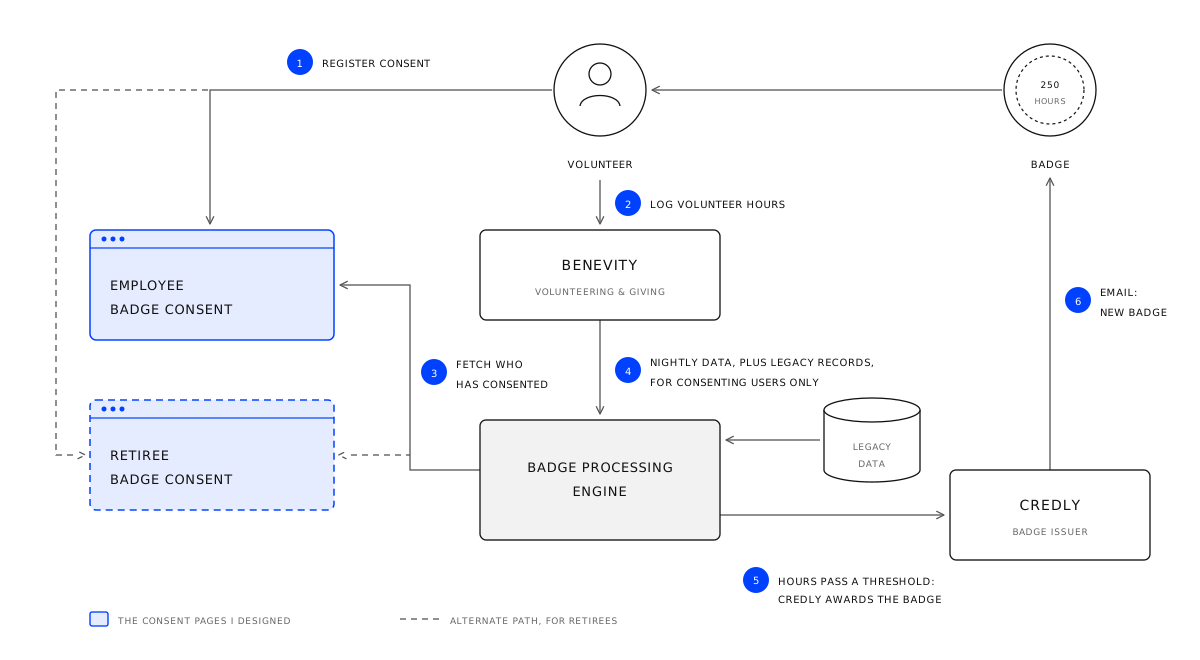
IBM employees and retirees earn digital badges for volunteering, from an Engagement Award at 40 hours up to Platinum at 4,000, issued through Credly. IBM's CSR team was automating them: log hours in Benevity, and the badge arrives by email.
But no hours count until someone accepts the programme's data privacy policy, so the consent pages sat at the start of the whole system.
01Overlay
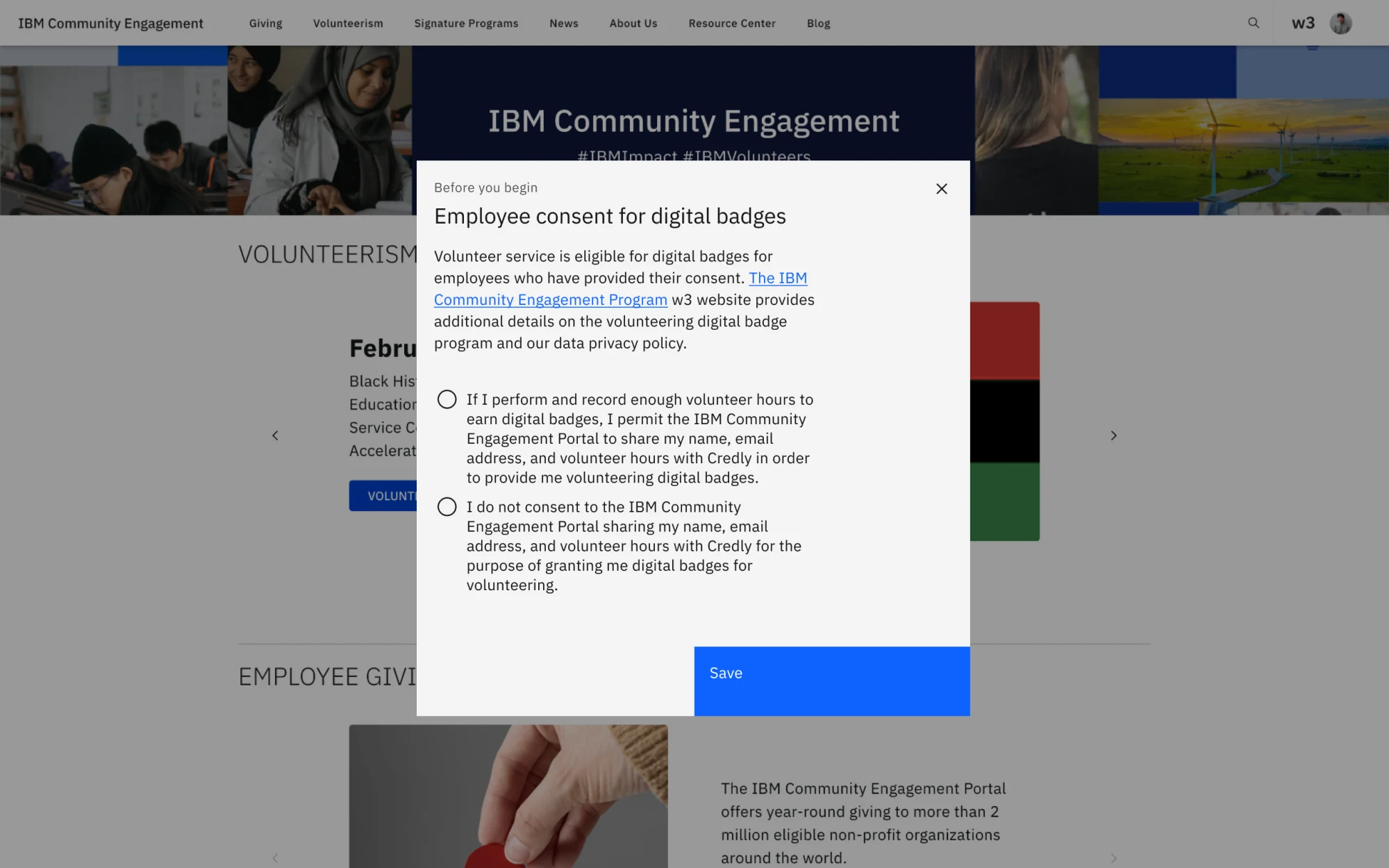
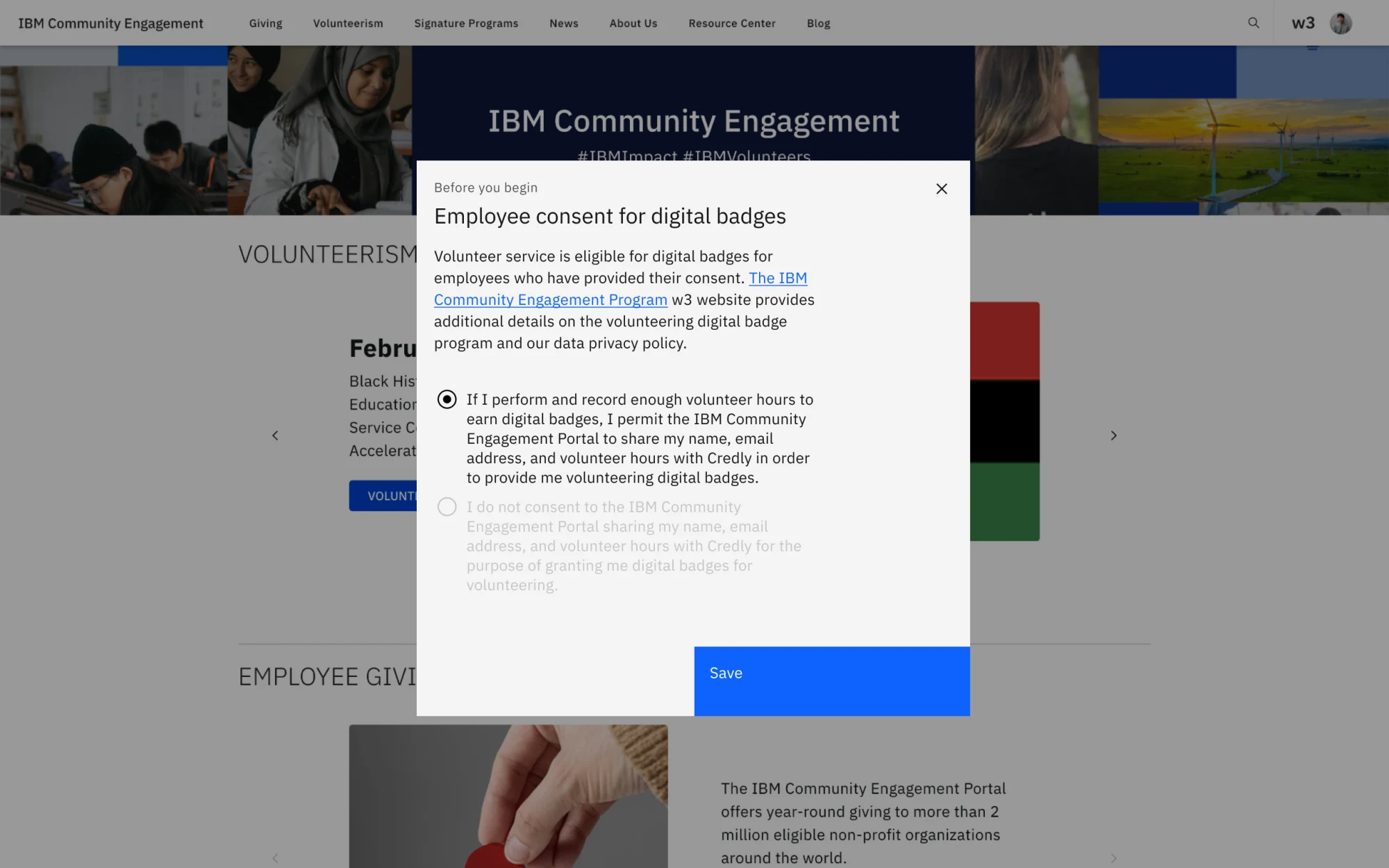
The first concept asked for consent in a Carbon modal, right where people already were.
A 'Before you begin' modal on the w3publisher volunteering page, built from Carbon's modal and radio buttons, with two choices, consent or don't. Picking one dims the other, and Save is the only way forward.
02Pivot
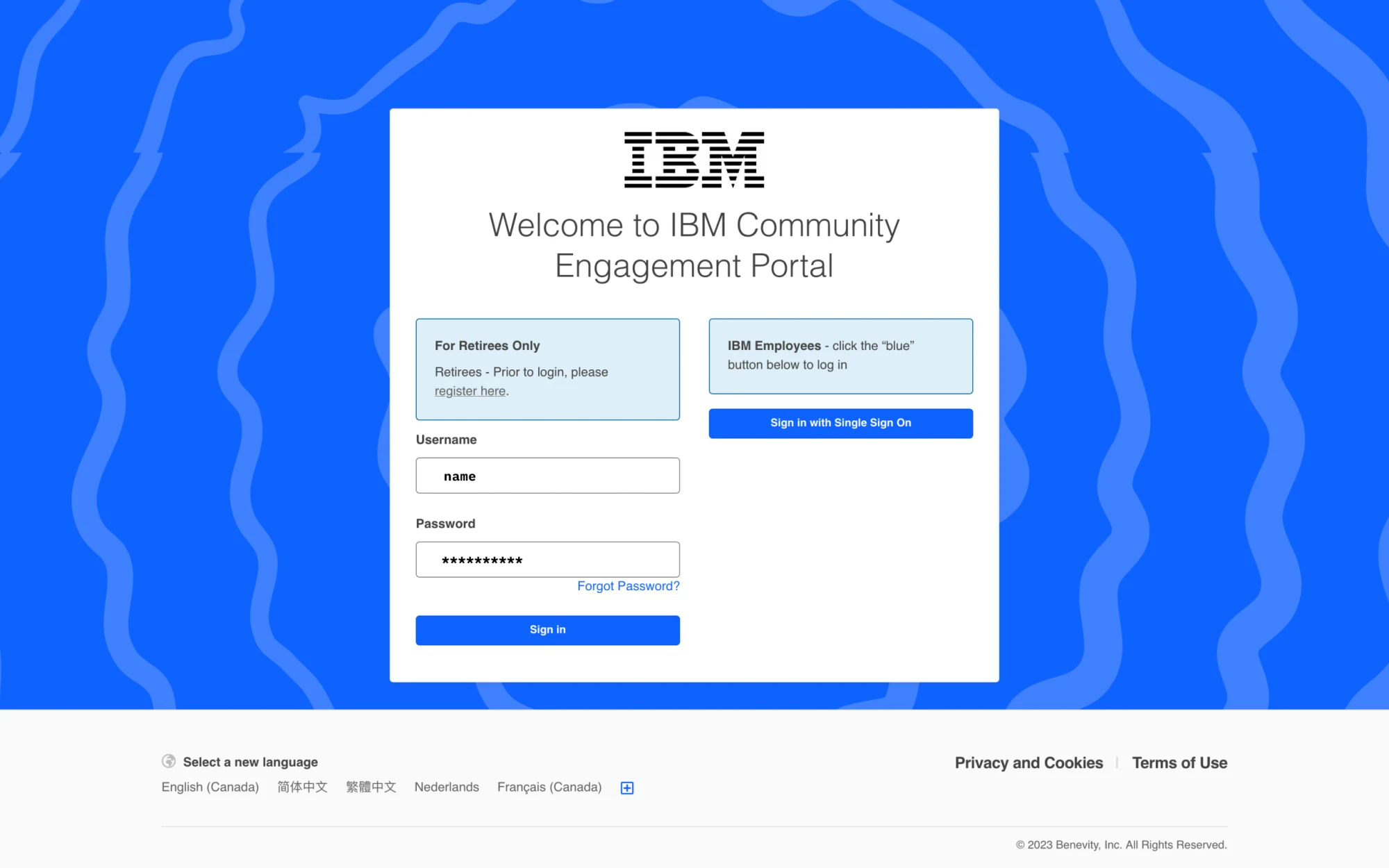
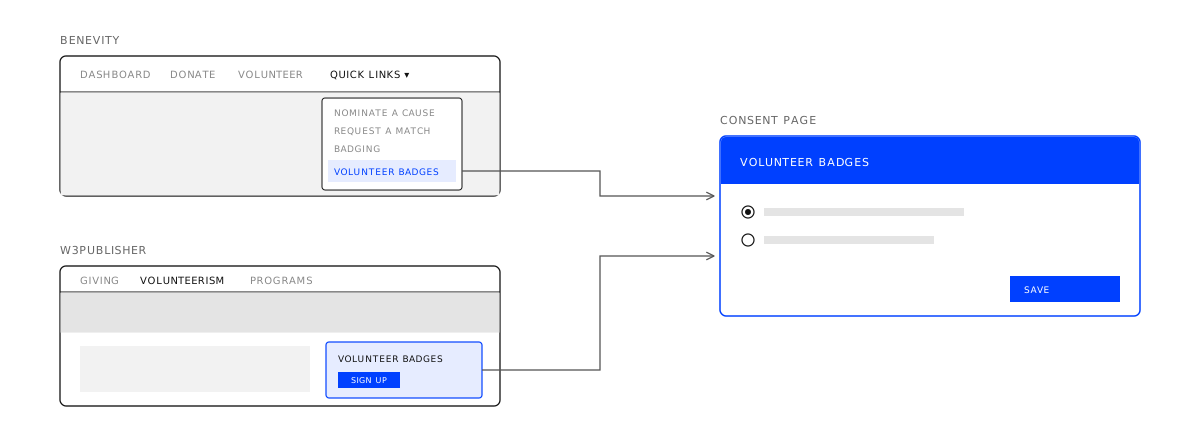
The host platforms couldn't run a modal, so consent moved to its own page, with a link in from each site.
In review, Kristin Lindeberg, the CSR offering manager, confirmed that Benevity and w3publisher don't allow that kind of customisation. Together we mapped where a link could live, in Benevity's Quick Links menu and as a sign-up card on the w3publisher volunteering page.
03Page
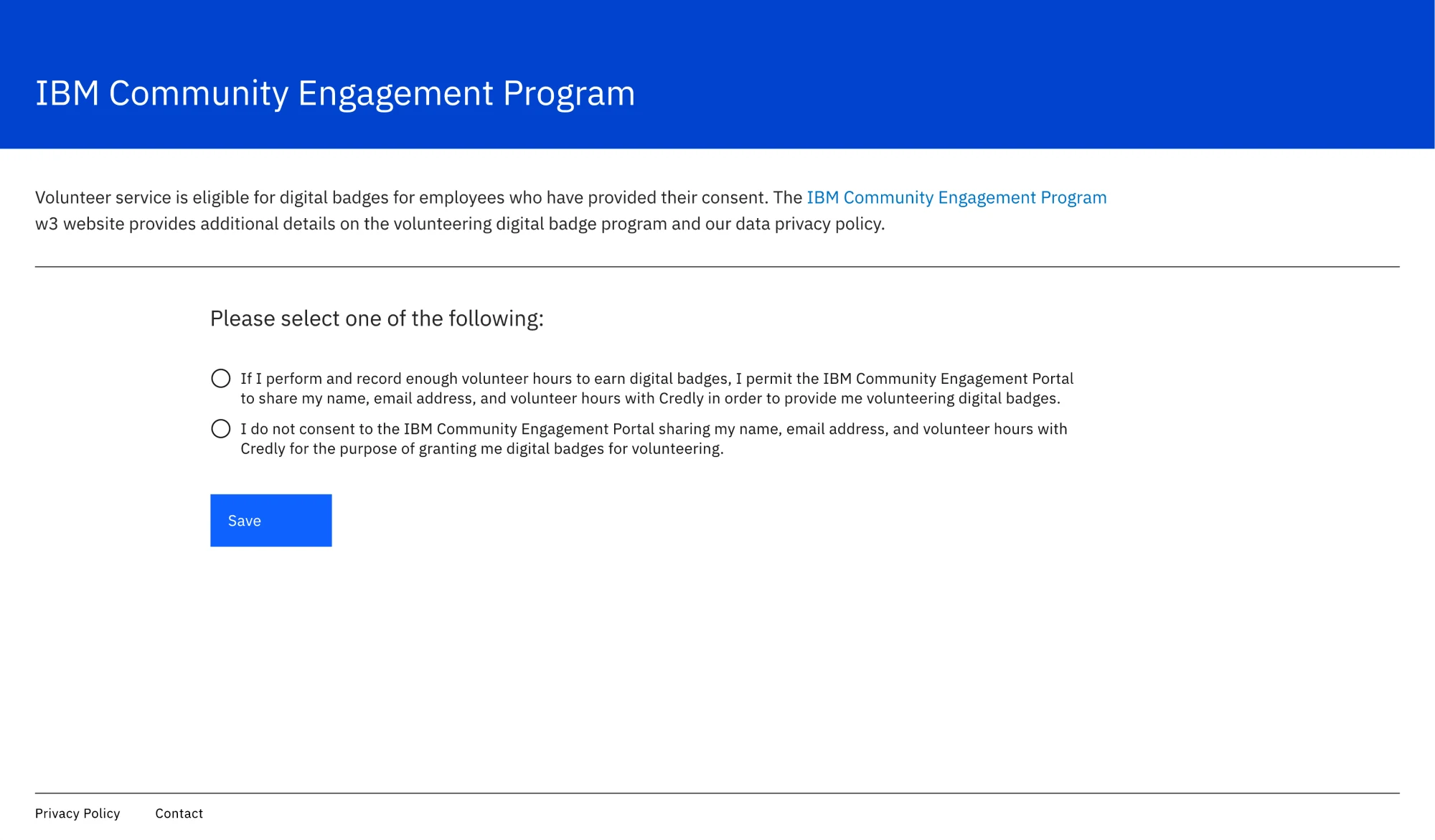
The consent page stands on its own, built closely on Carbon.
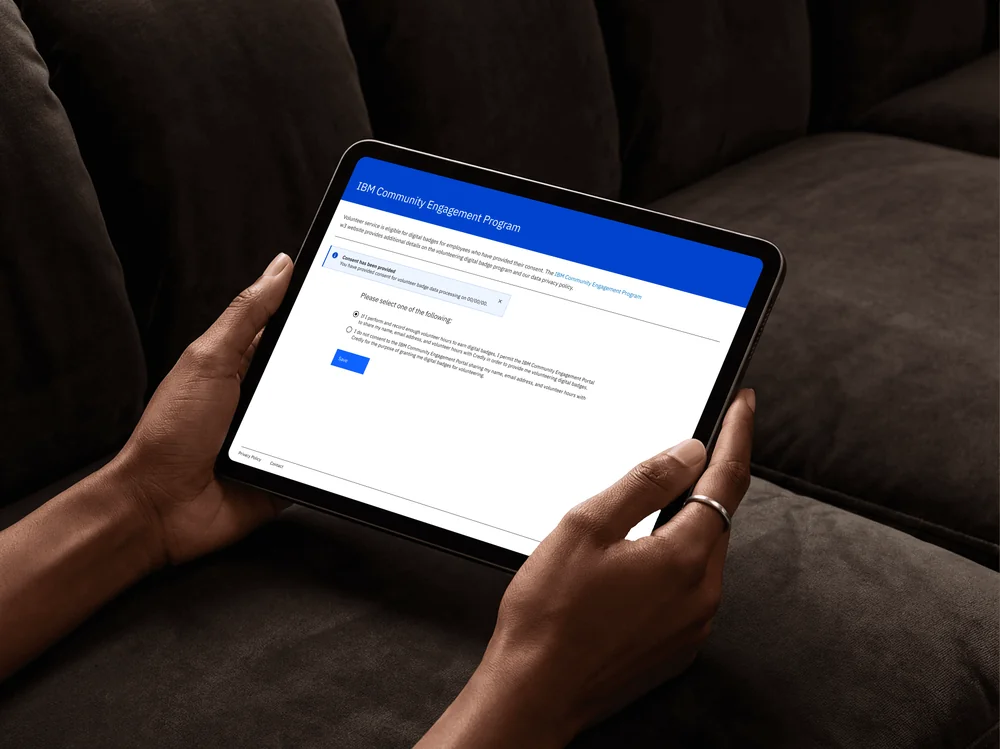
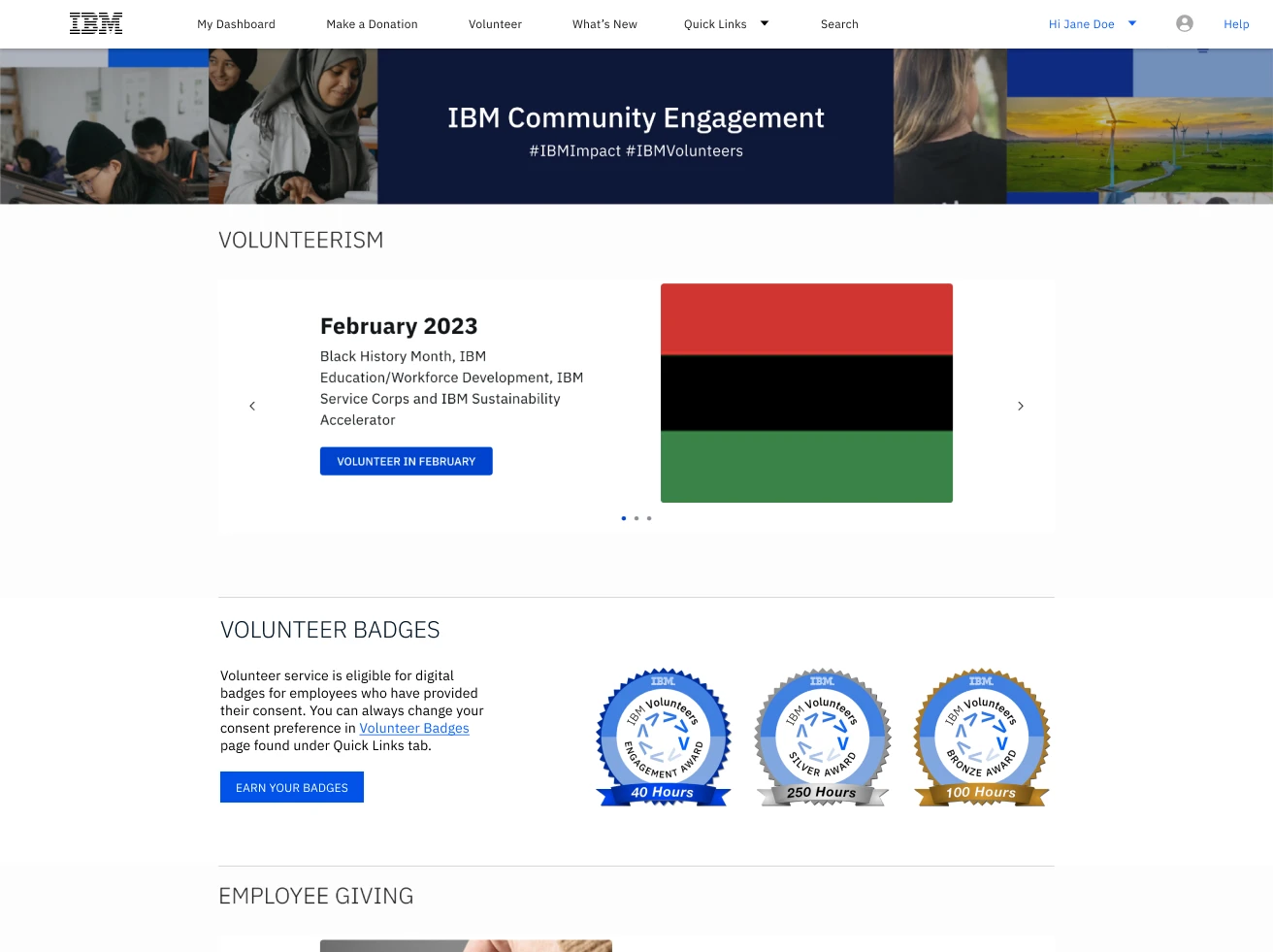
The page keeps to the programme's leadspace, the policy, the two choices and Save. The client leaned towards photography, so we also explored echoing the banner they already use on Benevity. Staying on Carbon's grid sped up internal review and meant IBM's team could carry it on without me.
 1
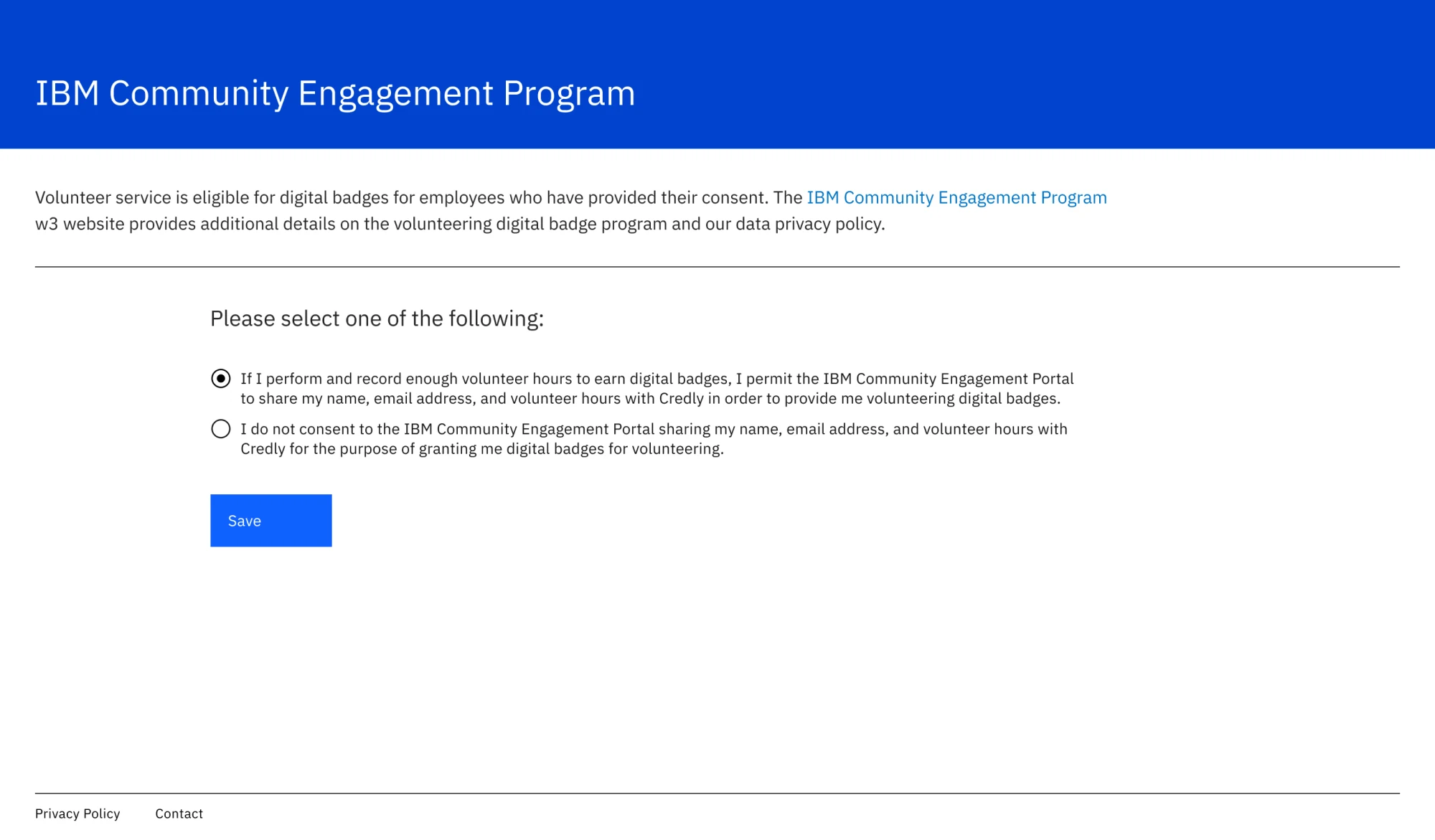
- 1Leadspace
A blue banner with the programme's name, as a clear title before the policy text.
- 2Link
Carbon Blue 60 on a light background, out to the programme's w3 page for the full policy.
- 3Notification
Carbon's inline notification. If you've consented before, it gives the date, so nobody is asked twice.
- 4Two choices
Consent or don't, as radio buttons, in the wording agreed with the client.
- 5Save
The only action on the page.
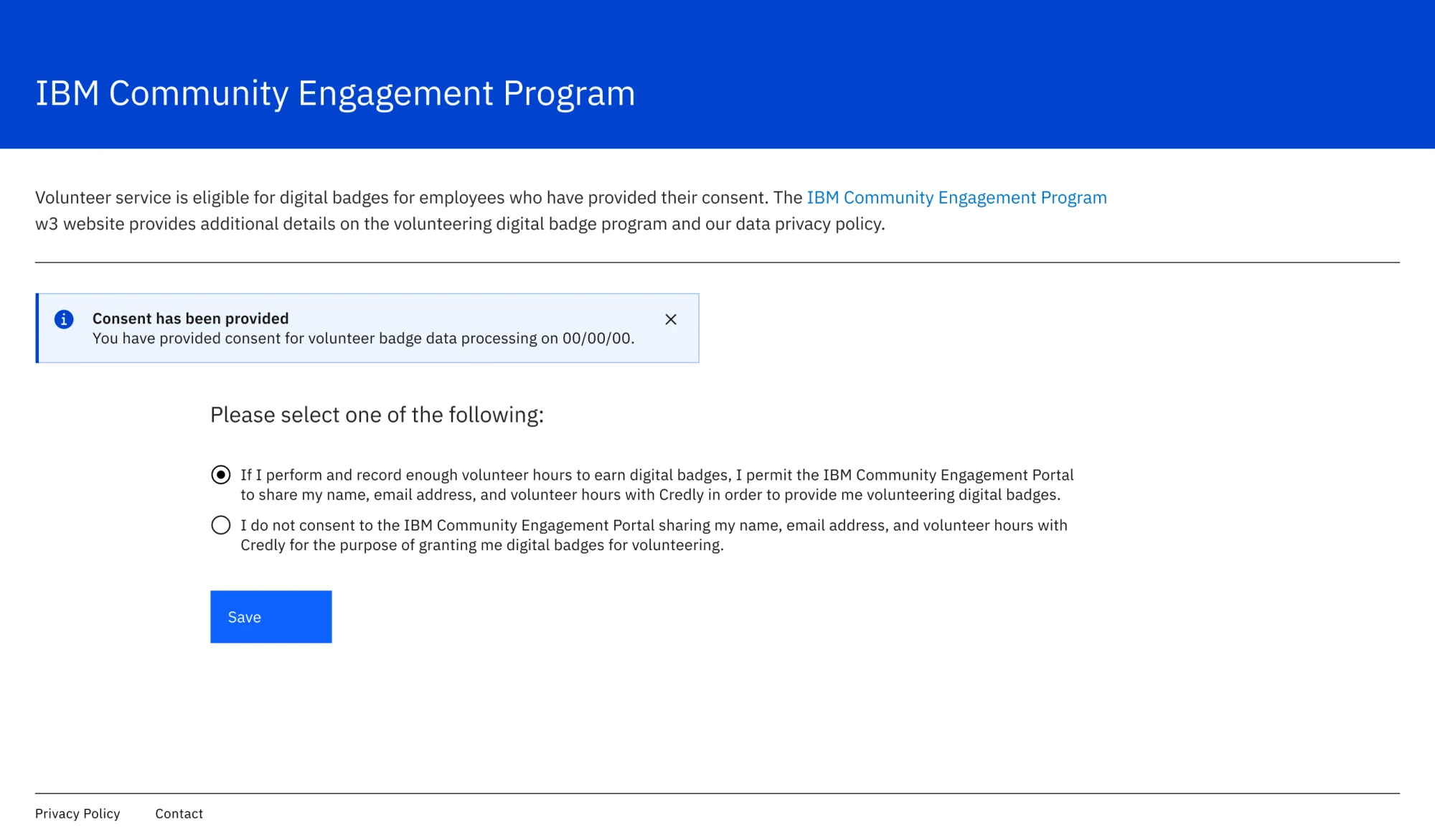 1
2
3
4
5
What I learned
I was still getting to know Carbon when I built the overlay from its existing components and colours.
Checking it with the client before going further caught a platform limit early and led to a better page. Now I confirm key design decisions before building on them.